

In the rapidly evolving landscape of Generative AI and automation, many enterprises feel the pressure to “do AI” without a clear map of where they are going or why. At SporaTek, we believe that technology should always follow business intent. To bridge this gap, we developed the Launch Point Framework—a strategic discipline designed to prepare your enterprise for automation before a single line of code is written.
How Launch Point Approaches Data Strategy and AI Blueprinting
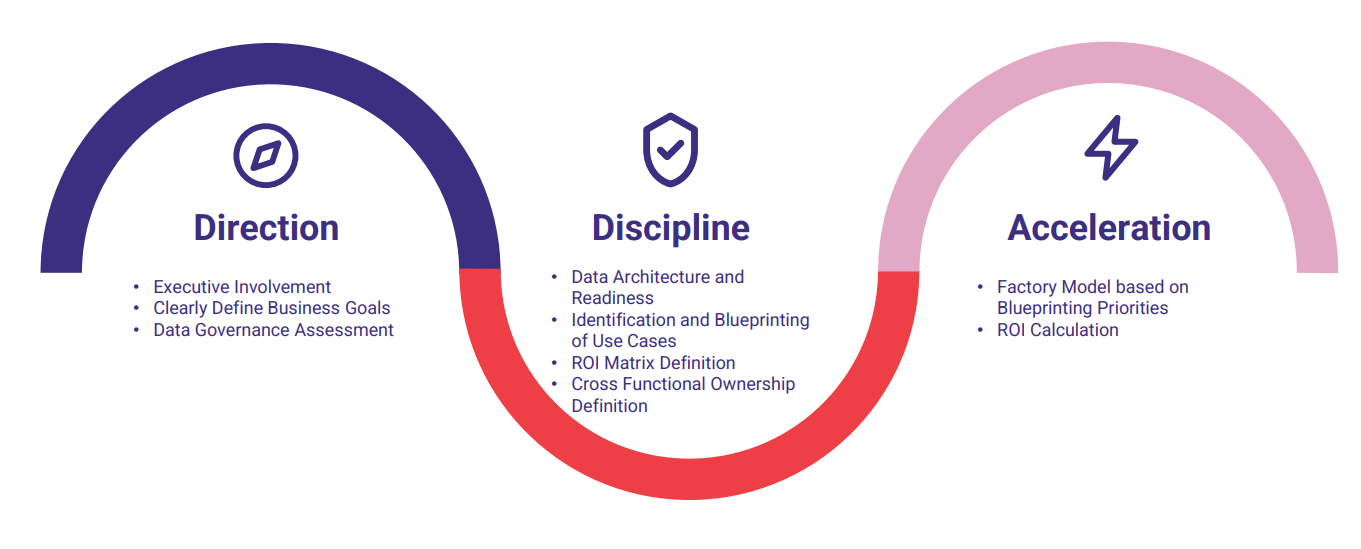
The Launch Point approach is built on three pillars: Direction, Discipline, and Acceleration. We don’t just offer a tool; we provide a bridge between business vision and technical execution.
Our approach starts with high-level executive involvement to ensure that every AI initiative is tethered to a clearly defined business goal. We then dive deep into Data Governance and Architecture. By identifying and blueprinting specific use cases through a rigorous ROI lens, we ensure that the path toward “Agentic Workflows” is both practical and profitable.
Why the Launch Point Phase Is Critical
Jumping straight into AI solutions without a strategic foundation often leads to “AI fatigue” or failed pilot projects. The Launch Point phase is essential because it:
- Ensures Business-First Alignment: It forces a shift from “Tech-First” to “Business-First,” ensuring every project has a measurable ROI matrix.
- Eliminates Guesswork: Through the Launch Point services, we remove the ambiguity of where to start, focusing only on high-impact areas.
- Secures Your Data: We assess your data readiness and security posture early, allowing for proprietary models to run on-prem or in private clouds safely.
- Identifies Technical Debt: We analyse existing system readiness to ensure legacy issues don’t stall your automation progress.
The Stages of AI and Data Strategy
Our strategy framework is a multi-dimensional assessment that looks at People, Process, Technology, and Governance.
| Stage | Focus Area | Key Deliverables |
|---|---|---|
| Assessment | Current data sources, quality, and security posture. | AI Readiness Scorecard & Data Management Report. |
| Gap Analysis | Identifying the distance between current state and the “AI-ready” target. | Challenges Report & Compliance Gap Map. |
| Business Study | Pinpointing pain points and prioritising AI use cases based on feasibility. | Use Case Blueprint & Stakeholder Engagement Report. |
| Strategize | Defining the target architecture and data governance for model trust. | Draft AI & Data Strategy & Governance Policies. |
| Roadmap | Building a phased, multi-year transformation plan. | Implementation Playbook & Target Architecture. |
Finalizing Use Cases and the Execution Model
Once the strategy is set, we move into Use Case Prioritisation and our Rapid Execution Model.
Use Case Selection Criteria
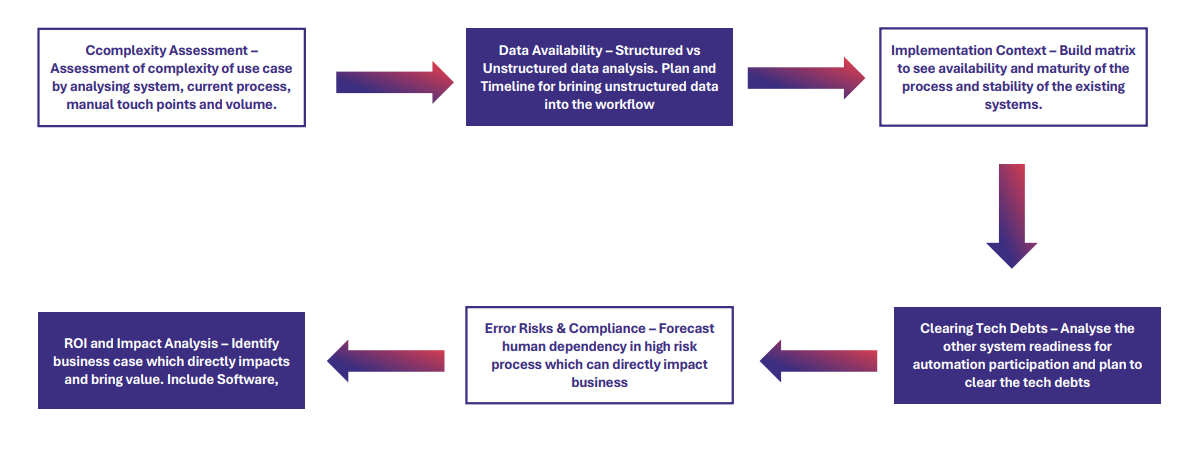
The Launch Point framework utilises a rigorous six-parameter evaluation process to prioritise automation use cases effectively. It begins with a Complexity Assessment to analyse systems, manual touchpoints, and volume, followed by a Data Availability study that plans the integration of structured and unstructured data into the workflow. The Implementation Context then builds a matrix to evaluate process maturity and the stability of existing systems, while a dedicated stage for Clearing Tech Debts ensures all participating systems are ready for automation. Finally, the framework forecasts Error Risks and Compliance by identifying human dependencies in high-risk processes and conducts a comprehensive ROI and Impact Analysis to select the business cases that deliver the most direct value.
The Execution Model
Our execution is designed for speed, typically moving from selection to “Go-Live” in 30 to 45 days.
- Selection Phase: Finalise use cases with management buy-in and a strategic roadmap.
- Design Phase: Finalise requirements, select tools, and complete the “Agent/Automation Blueprint”.
- Alpha Deployment: Orchestrate development, integrate systems, and validate results to capture measurable ROI.
By combining our “Agentic DNA” with a disciplined blueprinting process, we help enterprises stop “trying AI” and start building tomorrow, today.